
Probate Runs Through Chancery Court
Probate is the legal process of settling a deceased person's estate. In Coahoma County, that work belongs to Chancery Court, the state's court of equity. Circuit Court and Justice Court do not handle it. The Chancery Clerk files and keeps these records at the county courthouse in Clarksdale, and the 7th Chancery District hears the cases.
Chancery jurisdiction is broad. It covers matters testamentary and administration, the legal name for wills and estates. It also reaches guardianships, conservatorships, minors' business, and persons of unsound mind. Divorces run through the same court, and those files show up with Coahoma County marriage and divorce records. Land disputes, name changes, and adoptions land here too.
The Mississippi Judiciary's Chancery Court overview describes how equity courts manage estates and guardianships statewide.
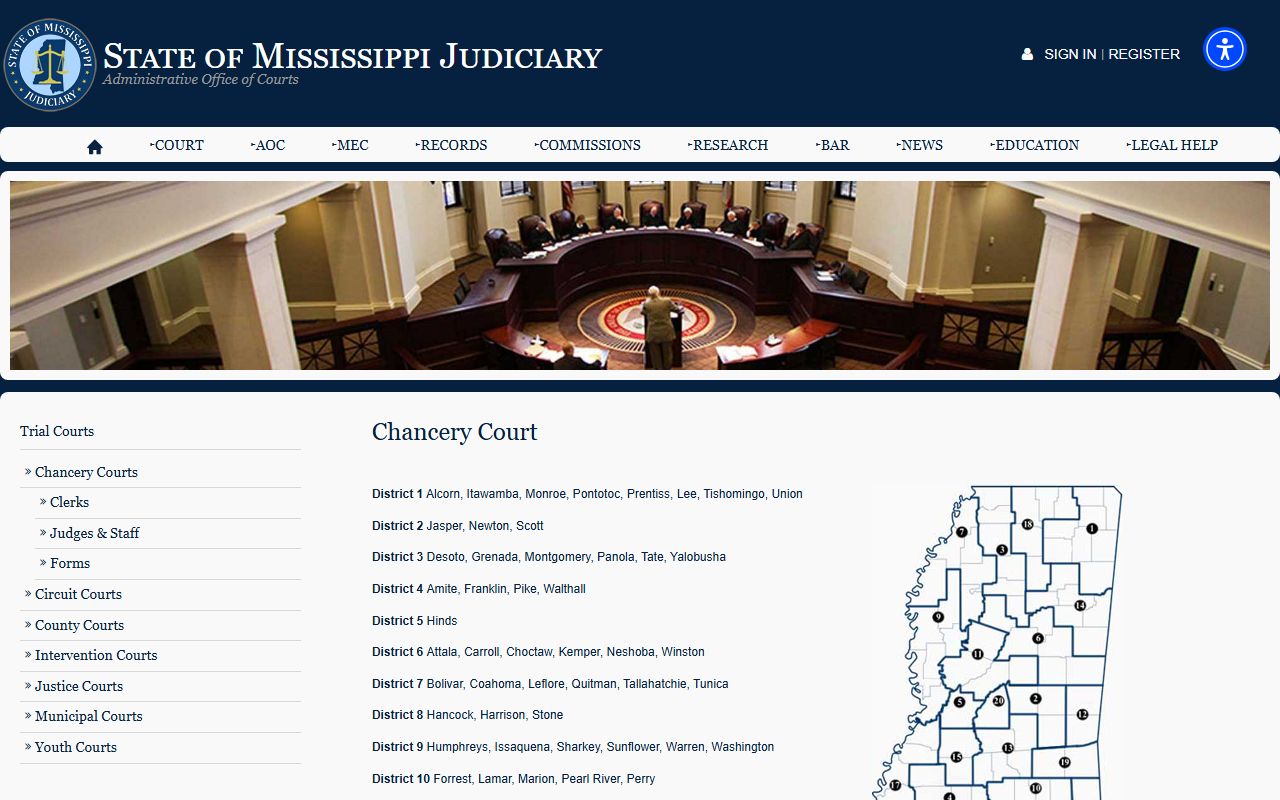
Coahoma estates follow that same equity framework through the local Chancery Clerk and the assigned chancellor.
Probate Terms Defined
Estate paperwork leans on words that rarely come up in daily life. A short glossary makes a docket entry or a court order easier to read.
- Testator
- The person who made the will. A testator names who inherits and who manages the estate.
- Executor
- The person named in the will to carry out its terms, pay debts, and distribute property.
- Intestate
- Dying without a valid will. State law then decides who inherits the estate.
- Guardianship
- A court arrangement giving an adult legal care over a minor or a ward's person.
- Conservatorship
- A court arrangement placing an adult in charge of another person's money and property.
What Coahoma County Probate Covers
The Chancery Clerk's estate filings span the full life of a case, from the first petition to the closing order. The public Coahoma docket shows real examples. The Estate of James Washington, Sr., Deceased, includes a petition to approve an accounting and inventory along with objections and responses. The Estate of Wardell Davis, Deceased, includes a motion to sell real property.
Probate and related chancery work in the county runs across several record types:
- Estates and estate administration
- Wills and matters testamentary
- Inventories and accountings
- Motions to sell real property
- Objections to accountings
- Guardianships and conservatorships
- Minors' business and persons of unsound mind
Each filing becomes part of the estate file the clerk maintains. Some documents are open to any visitor. Others carry redactions or limits, especially when a minor or a person's health is involved.
Most estates fall into one of two tracks. A testate estate has a valid will that names an executor and sets out who inherits. An intestate estate has no will, so state law fixes the heirs and the court appoints an administrator. Both tracks pass through the same Chancery Clerk, draw a cause number, and generate inventories and accountings the court must approve.
Coahoma County Chancery Clerk Contact
Sherita Wilson serves as the Coahoma County Chancery Clerk. Her office files and stores estate, guardianship, and conservatorship records and issues certified copies. Three deputy clerks help the public: Laura Williams at extension 1101, Sally McNeese at extension 1102, and Evangeline Maria Scheider at extension 1103. The office also records deeds, mortgages, and land documents, and broader recording duties appear on the Coahoma County clerk of court page.
Coahoma County Chancery Clerk
115 First Street
P.O. Box 98
Clarksdale, MS 38614
662-624-3000
Fax: 662-624-3040
Mon-Fri 8:00 a.m. to 5:00 p.m.
7th Chancery District - Coahoma
115 First Street
Clarksdale, MS 38614
662-624-3000
Mon-Fri 8:00 a.m. to 5:00 p.m.
How to Search Coahoma County Probate Records
Searching estate records is not a single-portal task. A reader first confirms the venue is Chancery Court, then picks the right channel. Open and upcoming matters live on the free hearing docket. Older or closed files live at the clerk's counter.
The 7th Chancery District page explains what the Chancery Court hears across its member counties.
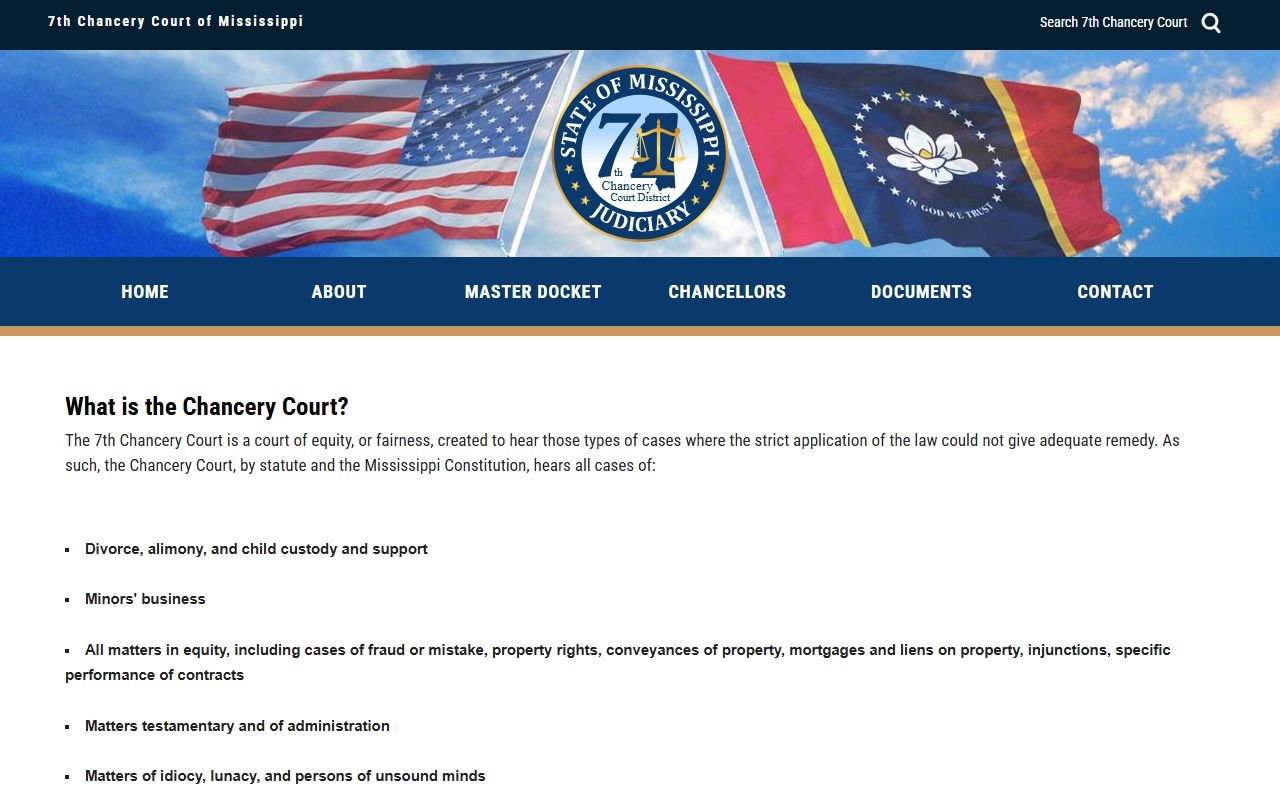
That same district publishes the Coahoma hearing docket, which is the quickest place to start a search.
- Browse the free 7th Chancery District Coahoma docket for estate captions, cause numbers, hearing dates, and the assigned chancellor.
- Register for Mississippi Electronic Courts through the PAMEC registration page for remote docket and document access.
- Visit or write the Chancery Clerk at P.O. Box 98 for older, closed, non-digitized, or certified estate files.
- Call 662-624-3000 before traveling or mailing fees so the clerk can confirm what exists and how to get it.
Captions read like "Estate of James Washington, Sr., Deceased," and cause numbers follow a yearly pattern such as 2023-317 or 2025-27. Having the decedent's name and an approximate death date speeds any lookup.
What Coahoma County Probate Records Show
An estate matter leaves a trail of public docket data and a deeper file at the clerk's office. The docket exposes the basics of each hearing, while the physical file holds the petitions, inventories, and orders. The table below lists the fields the official Coahoma docket displays.
| Field | What It Shows |
|---|---|
| Case caption | Estate name, such as Estate of [Name], Deceased |
| Cause number | Yearly case identifier, e.g., 2023-317 or 2025-27 |
| Hearing date and time | When the matter is set before the court |
| Chancellor | The judge assigned to the estate |
| Matter type | Accounting, inventory, objection, response, or motion to sell property |
| Attorneys | Counsel of record for the parties |
| Setting location | The Coahoma County hearing site |
The public docket lists filings but does not post the PDFs. Inventories and accountings sit in the full file at the clerk's office. Financial figures and minor details may be limited or redacted.
A completed estate file usually opens with the petition and the will, if one exists. It then builds out with letters that empower the executor or administrator, an inventory of property, claims by creditors, periodic accountings, any objections, and the court's final order closing the estate. Reading these in order tells the full story of how the property moved from the decedent to the heirs.
How Probate Works in Coahoma County
An estate moves through Chancery Court in a fairly set order. Knowing the steps helps a family member, an heir, or a researcher follow a case from opening to closing. The Chancery Clerk handles the paperwork at each stage.
- Identify the venue as Coahoma County Chancery Court.
- Contact or visit the Chancery Clerk at 115 First Street, Clarksdale.
- File the petition, such as estate administration, probate of a will, guardianship, conservatorship, accounting, or sale of property.
- The case receives a cause number and is handled through the 7th Chancery District.
- Hearings may appear on the Coahoma docket with the time, chancellor, caption, and attorneys.
- Inventories, accountings, objections, responses, and orders become part of the file.
- Request certified copies or older records through the Chancery Clerk, not Justice Court or the Circuit Clerk.
Note: Probate venue is always the Chancery Clerk, so a request sent to the Circuit Clerk or Justice Court will be redirected and delayed.
Coahoma County Probate Filing Fees
Official Coahoma sources do not publish a fixed probate fee list. Filing costs, copy charges, and safekeeping fees can change, so the amounts below should be confirmed with the office before any visit, mailing, or payment. Call ahead to learn the current charge and the accepted payment methods.
| Item | Amount |
|---|---|
| Filing an estate or probate matter | Confirm with the Chancery Clerk |
| Certified copy | Confirm with the Chancery Clerk |
| Plain copy | Confirm with the Chancery Clerk |
| Will filing or safekeeping | Confirm with the Chancery Clerk |
Mail requests go to P.O. Box 98, Clarksdale, MS 38614, with the decedent's name and a death date. MEC users may also face an annual access fee and per-page document charges, which the registration page confirms at sign-up.
Restricted Coahoma County Probate Details
Not every part of an estate file is open. Guardianships and conservatorships often involve minors, the elderly, or people who cannot manage their own affairs. Those records can be limited to protect the ward. Mental-health and alcohol or drug commitments handled by the same court are sensitive and are not treated as ordinary public files.
Public estate files may also hide certain identifiers. The clerk can redact Social Security numbers, financial account details, minor names, and medical information. The fact that a case exists does not mean every attachment is open to a casual searcher. Adoption files filed in Chancery Court are restricted unless a statute or court order allows access.
A person seeking a protected file should expect to show party status, attorney status, or a court order. When ordinary copy channels do not apply, the county's Access to Public Records Policy sets the local request rules. Contact the Chancery Clerk first to learn what a given estate file allows.